

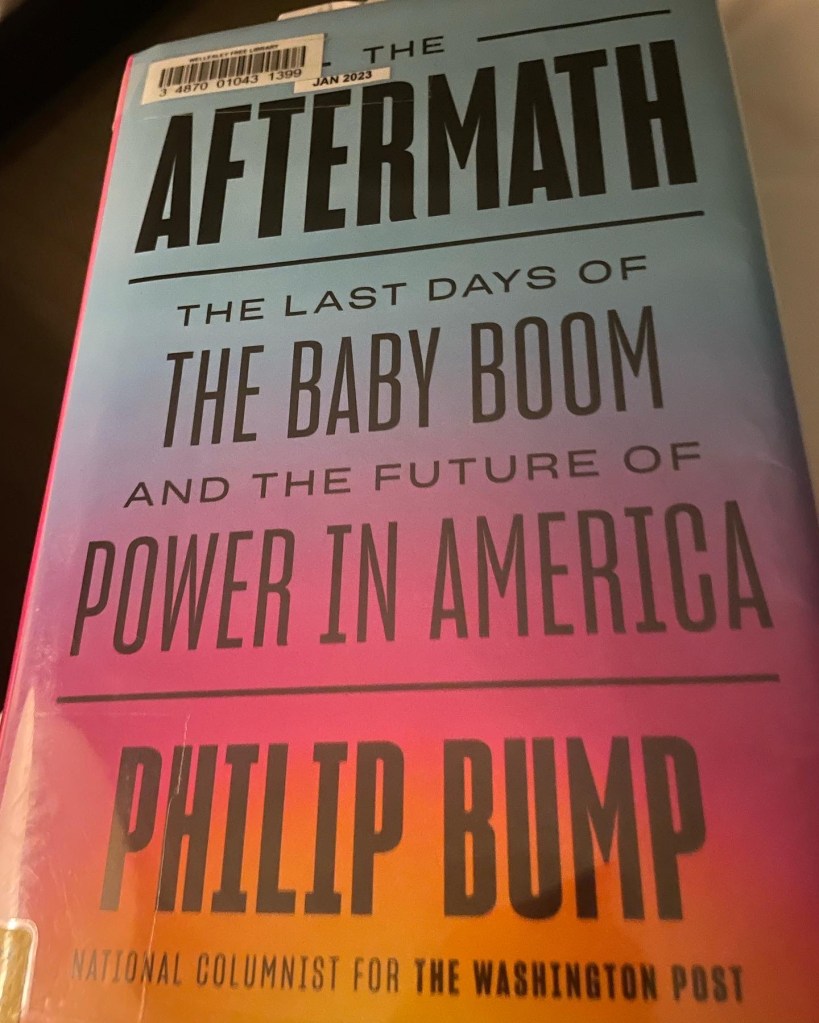
The Aftermath: Boy, this was an intense read in that it provides a LOT of information and making the time to read quietly, absorb and process it took a while. The central thesis of the book is this: the boomers (roughly 1946 – 1964) have historically been the largest cohort in US history, and by the sheer scale of their size, have moved corporations, governments, and society at large to accommodate their values and preferences. And for decades they’ve been used to (not necessarily consciously) having the world adapt to their needs. But now, there’s another equally large cohort that has been begun flexing their collective muscle – millennials (roughly 1981-1996). And the cultural conflict we see across various parts of society is because the millennials are fundamentally different in their composition and values than boomers, and being of equal size, are forcing a kind of reckoning on where the country goes from here.
As a Gen X-er, this was something I might have sub-consciously felt – that it seemed a little too hard to create change, and that our voices somehow got drowned out. The data in the book bears this out 😃
Some broad takeaways: 1. the boomer generation is less diverse not out of their choice, but because of the highly restrictive immigration policies that were passed in the 1920s, which meant that the native-born population of the United states during the birth of their cohort was very white. Immigration policies became less racist in the 1960s, which means the millennials were born from a much more diverse parent population. 2. As boomers age and leave the workforce, and age and die, the impact on housing, senior care, and the economy in general can go so many ways, depending on whether the policies enacted now are forward looking or reactionary to the moment. 3. Millennials are more likely to be college-educated than boomers which explains some portion of why their values differ. 4. For the past four decades, boomers have solidly been in power (political office holders), which means the policies enacted have benefited their cohort the most – cue millennial outrage around housing, wealth inequality, and their demands for change, which in term leads to boomer angst for why things aren’t the way they used to be, anymore.
Much more to be had from this book – if you have the patience, I’d highly recommend getting this and sitting with the information. It provides a different lens to what’s going now (it’s not all race-related, which in no way minimizes the fact of structural inequities), and depending on the day/mood/news cycle, one is alternatively hopeful and gloomy about the future.
Some e.g. of boomer power: from the early days of the boom kids being born, diapers grew from a few million dollars worth to the multi-billion dollar industry it is today. Local governments invested in building large schools to accommodate the boomer kids as they grew up, and music and blue jeans became the cultural forces they are because boomers adopted them in the numbers that they did. Four of the past five presidents (Clinton, W, Obama and Trump) are boomers, and the majority of house and senate (federal and state) are as well.
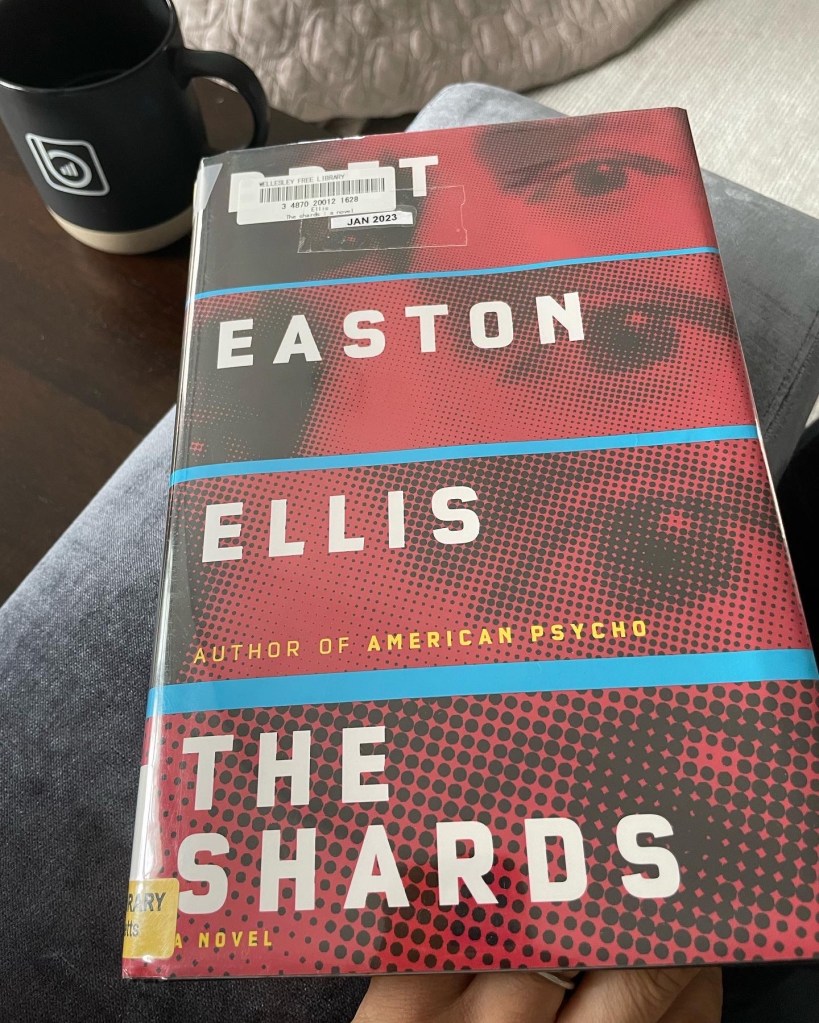
Bret Easton Ellis’ The Shards is a deeply disturbing but set against a louche backdrop of 80s’ private schools in the LA area. There are endless scenes of casual drug use in high school, kids of wealthy parents with all the material comforts at hand but with little supervision otherwise. Amidst this backdrop, a serial killer is at large, one who adorns their victims in the most grotesque way possible. As the novel proceeds, the narrator becomes increasingly unreliable and the end is left open to interpretation. Alternating The Shards with The Aftermath helped me take my time with the latter, processing what I read before reading further.
 Inquiring Mother